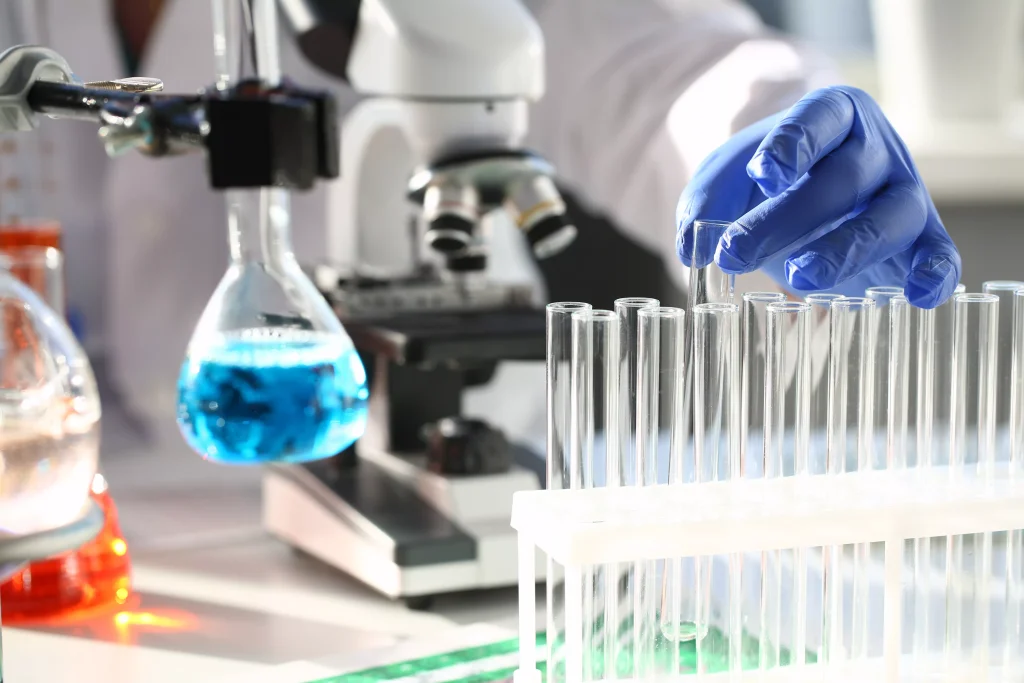
The reliable quality of antipsychotic drug raw materials is important to the pharmaceutical industry. The safety and effectiveness of drugs used to treat complicated mental illnesses are determined by these chemical underpinnings. A maze of supply chain logistics, regulatory requirements, and synthesis pathways must be negotiated by engineers and procurement specialists. We will examine the important elements of obtaining.
Manufacturers and Suppliers of Antipsychotic Raw Materials
A strategic choice is making the right partner for the production of antipsychotic drug raw material. When patient health is at stake, quality cannot be compromised.
Things to Take Into Account While Choosing a Supplier
Potential partners must be assessed by engineers using strict technical standards. You ought to consider more than just simple pricing schemes. Analyze their technical proficiency in purification and synthesis. Consistent batch-to-batch reproducibility is a requirement for a trustworthy supplier. Furthermore, you must verify their supply chain resilience. Can they ensure delivery when there are worldwide shortages? Additionally, documentation transparency cannot be compromised. Every kilogram of material you buy must have full traceability.
Advantages of Collaborating with Approved Vendors
Regulatory risks are reduced when working with certified suppliers. Good Manufacturing Practices (GMP) are followed by certified manufacturers. The antipsychotic drug raw material is guaranteed to be free of dangerous contaminants thanks to this compliance.
This dedication to quality is demonstrated by Shanghai Arbor Chemical Co., Ltd. Shanghai Arbor Chemical Co., Ltd., a prominent producer of pharmaceutical intermediates, is committed to offering clients worldwide top-notch goods and services. The company has been in the business for more than ten years, and during that time it has developed a great deal of experience in the synthesis, purification, and commercialization of various chemical compounds.
Our advanced machinery and stringent quality controls guarantee that every product we produce satisfies international standards, and we have multiple plants in Dalian and Anhui that are certified both domestically and internationally. To address the unique requirements of our customers, we also offer contract manufacturing and custom synthesis services.

Production of Antipsychotic Raw Materials
Complex chemical engineering is involved in the production of these materials. The main objectives are efficiency and purity.
Synopsis of Production Procedures
Usually, the first step in production is choosing the precursor chemicals. Chemical engineers design reaction pathways to maximize yield. Multi-step synthesis is frequently used in the process. Alkylation, condensation, and purification processes like crystallization or chromatography fall under this category. Throughout these phases, precise control over temperature and pressure is necessary.
Production Difficulties and Their Solutions
There are many challenges in scaling up from lab to industrial production. Dangerous runaway reactions can result from problems with heat transfer. Engineers use sophisticated flow chemistry reactors to solve this. Compared to conventional batch vessels, these reactors provide superior thermal control. Impurity removal presents another difficulty. High-performance liquid chromatography (HPLC) is used by manufacturers to identify and eliminate even minute impurities.
Advanced Technologies’ Function
Automation transforms production efficiency. Reaction parameters are continuously monitored by automated control systems. This technology guarantees constant product quality while lowering human error. Process analytical technology (PAT) also makes it possible to continuously monitor quality throughout the manufacturing process.
Intermediates of Antipsychotic Raw Materials
The final active pharmaceutical ingredient (API) is constructed from intermediates.
Explanation of Intermediates in Synthesis
Manufacturers cannot make complex antipsychotic medications in a single step. Chemists call the compounds created in the middle stages of synthesis intermediates. Their quality directly impacts the yield and purity of the finished antipsychotic drug raw material.
Illustrations of Often Used Intermediates
Chemists need certain intermediates for different classes of antipsychotics.
- Phenothiazines: Phenothiazine derivatives are frequently needed as precursors.
- Butyrophenones: 4-chloro-1-(4-fluorophenyl)butan-1-one may be used in the synthesis.
- Atypical Antipsychotics: Substances such as derivatives of piperazine are commonly employed.
Intermediates’ Significance for Effectiveness
The final drug molecule will fail if an intermediate has structural flaws. Impurities in intermediates can lead to toxic byproducts in the final API. As a result, producers need to apply the same strict quality control to intermediates as they do to finished goods.
Raw Material for Antipsychotics
In the production of pharmaceuticals, pharmaceutical grade classification is very important. Humans cannot safely ingest every chemical grade.
Meaning and Importance
Pharmaceutical-grade materials meet the highest purity standards established by pharmacopeias (USP, EP, JP). This grade of antipsychotic drug raw material must have incredibly low levels of residual solvents and heavy metals, in contrast to industrial-grade chemicals. Patients’ negative reactions are avoided by this purity.
Measures for Quality Control
Numerous analytical tests are part of quality control.
Chemical structure is confirmed by spectroscopy (NMR, IR).
- Chromatography (GC, HPLC): Measures impurities and purity.
- Microbial testing: Verifies endotoxin absence and sterility.
Effects on Efficiency and Safety
It is dangerous and unlawful to use non-pharmaceutical grade materials. The bioavailability of the medication can be changed by even small contaminants. Pharmaceutical-grade assurance ensures that the drug functions in the human body precisely as intended.
Bulk Supply of Antipsychotic Raw Materials
A strong supply strategy is necessary for large-scale manufacturing. Purchasing in bulk has several benefits.
Advantages of Bulk Purchasing
Purchasing antipsychotic drug raw materials in large quantities greatly lowers the cost per unit. Additionally, it makes logistics easier. You lower administrative overhead and handle fewer shipments. Your production lines won’t ever stop because of a lack of materials if you have a steady supply in bulk.
Important Things to Think About When Buying in Bulk
One of the main concerns is storage stability. You need to make sure you have enough climate-controlled storage. Additionally, you must confirm the bulk material’s shelf life. Strict inventory control is necessary for large volumes in order to avoid expiration before use.
Top Providers of Bulk
There are a number of important players in the market. Integrated supply chains are common among top suppliers. From the procurement of raw chemicals to their ultimate distribution, they have complete control. To reduce regional risks, global leaders usually have manufacturing facilities in North America, Europe, and Asia.
Synthesis of Antipsychotic Raw Materials
Scientists determine the material’s quality based on the underlying science. Synthesis innovations propel the sector forward.
Synthesis Methods Overview
Established organic chemistry reactions are the foundation of classical synthesis. Although these techniques have a wealth of documentation, they may not be very effective. Chemists frequently use convergent synthesis in contemporary methods. This technique involves building distinct molecule fragments concurrently and then joining them.
Advances in Synthesis Methods
Green chemistry is revolutionizing synthesis. Researchers are developing catalysts that operate at lower temperatures. Additionally, enzyme-catalyzed reactions are becoming more popular. These bio-catalytic techniques minimize the need for dangerous solvents and provide high specificity.
Environmental Aspects
Waste management is necessary. Chemical waste from traditional synthesis is substantial. Modern facilities use solvent recovery systems. Before releasing wastewater, they also treat it to get rid of harmful byproducts.
Raw Material for Antipsychotics CAS Number
Precise identification avoids catastrophic errors. The industry standard is the CAS number system.
The Significance of CAS Numbers
Chemical names can be confusing. An identifiable, distinctive number is provided by a CAS (Chemical Abstracts Service) Registry Number. It removes confusion brought on by trade names or synonyms. For instance, “Chlorpromazine” serves as a name, but its CAS number clearly identifies the particular chemical entity.
Compliance and Traceability
Regulators use CAS numbers to monitor chemicals worldwide. Customs officers use these figures when you import or export goods. They guarantee that the material conforms to international safety regulations.
Illustrations of Common Materials
|
Drug Class |
Generic Name |
CAS Number Example |
|
Typical |
Chlorpromazine HCl |
69-09-0 |
|
Typical |
Haloperidol |
52-86-8 |
|
Atypical |
Clozapine |
5786-21-0 |
|
Atypical |
Olanzapine |
132539-06-1 |
|
Atypical |
Risperidone |
106266-06-2 |
Raw Material for Antipsychotics Custom Synthesis
Off-the-shelf solutions do not always meet certain needs. Custom synthesis fills these innovation gaps.
Custom Synthesis: What Is It?
The custom synthesis is the process of creating a molecule just for a particular customer. Clinical trials and drug discovery frequently involve this. It enables pharmaceutical firms to acquire special derivatives that companies do not sell commercially.
Advantages of Customized Formulations
A novel delivery system may not always be compatible with a standard API. Engineers can alter the antipsychotic drug raw material’s salt form or particle size through custom synthesis. In the finished dosage form, this customization increases stability and solubility.
Top Providers
These services are provided by leading Contract Manufacturing Organizations (CMOs) and Contract Research Organizations (CROs). They have specialized tools for handling high potencies. Businesses like Shanghai Arbor Chemical Co., Ltd. offer these specialized services to aid in the development of niche pharmaceuticals.
Active Ingredients in Antipsychotic Raw Materials
The central component of the therapeutic effect is the active ingredient.
The Function of Active Substances
The active pharmaceutical ingredient (API) interacts with the brain’s receptors. These components usually affect serotonin and dopamine receptors in antipsychotics. Manufacturers must produce an API with the precise stereochemistry needed for receptor binding from the raw material.
Therapeutic Uses and Examples
- Treatment-resistant schizophrenia is treated with clozapine.
- Major depressive disorder and bipolar disorder are treated with quetiapine.
- Aripiprazole functions as a partial dopamine agonist through a novel mechanism.
Ensuring Purity and Potency
Potency testing verifies the active ingredient’s concentration. Purity analysis guarantees the absence of degradation products. Manufacturers use stress testing to forecast how an ingredient will react to heat, light, and humidity. They use this data to determine the proper storage conditions and expiration dates.
Typical Questions and Responses
What are raw materials for antipsychotics?
Chemists refer to the chemicals used to make drugs for mental illnesses like bipolar disorder and schizophrenia as antipsychotic raw materials.
What is the significance of pharmaceutical-grade raw materials?
Pharmaceutical-grade materials guarantee the final drug product’s safety, effectiveness, and adherence to legal requirements.
What part do intermediates play in the creation of antipsychotic medications?
In order to ensure the therapeutic efficacy of antipsychotic medications, intermediates are necessary for the synthesis of their active ingredients.
How do CAS numbers aid in the procurement of raw materials?
CAS numbers uniquely identify chemicals.
In terms of antipsychotic raw materials, what is custom synthesis?
Custom synthesis involves creating specific raw materials tailored to unique drug formulations.