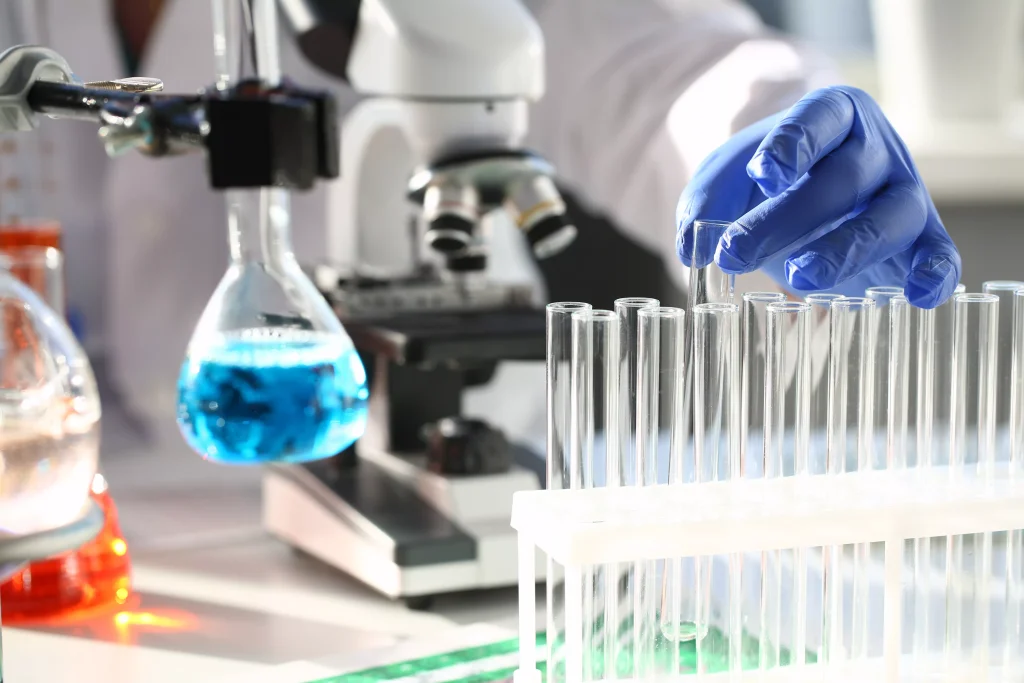
Active Pharmaceutical Ingredients (APIs) are the core components of any drug. They produce the intended health effects. Transitioning from lab-scale synthesis to commercial volumes is critical for any pharmaceutical product’s success. This process, known as large scale API production, involves manufacturing APIs in substantial quantities to meet market demand. It requires careful planning and precise execution to ensure the final drug is both safe and effective for patients.
Large Scale API Production
Successfully scaling up API manufacturing involves several critical factors. Process optimization is a primary concern. A method that works in a small lab may not be efficient or safe at a larger volume. Therefore, chemists and engineers must refine the synthesis route for scalability, cost-effectiveness, and safety. This often involves changing solvents, reagents, or reaction conditions.
Furthermore, risk mitigation is necessary during the scale-up phase. Potential issues like thermal runaway, side-reaction formation, and impurity generation increase with batch size. A thorough risk assessment identifies these hazards early. This allows for the implementation of control strategies to prevent them. Equally important is adherence to regulatory standards. All large scale API production must follow Good Manufacturing Practices (GMP). GMP API production ensures that every batch is consistently high quality and free from contamination.
The API Manufacturing Process Steps
The API manufacturing process is a multi-step journey from raw materials to a purified final product. Each stage requires meticulous control to achieve the desired outcome.
The process begins with synthesis. This involves a series of controlled chemical reactions to build the complex API molecule from simpler starting materials. Chemists carefully design this pathway for efficiency and yield.
Following synthesis, the crude API undergoes purification. This step is important for removing unreacted starting materials, byproducts, and other impurities. Techniques like chromatography and extraction are common methods used to achieve the high purity required for pharmaceuticals.
Next, crystallization helps to isolate the API in a stable, solid form. This step is critical because the crystal structure can affect the drug’s solubility and stability. Controlling the crystallization process ensures a consistent product.
After crystallization, the API must be dried. Drying removes any residual solvents left over from synthesis and purification. This is typically done under vacuum at a controlled temperature to prevent degradation of the API.
This step reduces the particle size of the API to a uniform specification. Particle size is important because it influences how the drug dissolves in the body and how it can be formulated into a final dosage form like a tablet or capsule.

Challenges in Scaling API Production
Transitioning to bulk API production presents significant challenges. One of the biggest hurdles is maintaining quality control across very large batches. Minor inconsistencies that are negligible in a small batch can become major problems at scale. Consequently, robust analytical testing and process monitoring are necessary at every stage.
Navigating complex regulatory landscapes is another major challenge. Different countries have their own regulatory bodies and specific requirements for drug manufacturing. To get approval in more than one market, you need to know these rules inside and out and have all the necessary paperwork.
At last, supply chain management becomes more complex. Securing a reliable and consistent supply of high-quality raw materials is paramount. Any disruption in the supply chain can halt production. Therefore, a resilient supply chain strategy is a key component of successful large scale API production.
What CDMO Partners Do in API Production
Many pharmaceutical companies partner with a Contract Development and Manufacturing Organization (CDMO) to manage their API production. Selecting the right CDMO is a critical decision. Key criteria include the CDMO’s technical capabilities, regulatory track record, production capacity, and quality systems. A good partner will have experience with similar molecules and a history of successful regulatory inspections.
Leveraging a CDMO offers several benefits. These organizations provide specialized expertise in process development, scale-up, and regulatory compliance. They already have the infrastructure and qualified personnel in place. This partnership allows pharmaceutical companies to focus on their core strengths, such as drug discovery and marketing.
Innovations in Large Scale API Production
The pharmaceutical industry continuously seeks innovative manufacturing methods. One significant innovation is the adoption of continuous manufacturing in API production. Unlike traditional batch manufacturing, continuous processes run without stopping. This approach improves efficiency, reduces waste, and often results in a more consistent product quality.
Green chemistry practices are also becoming more prevalent. These principles focus on designing processes that reduce or eliminate the use of hazardous substances. This not only minimizes the environmental impact of manufacturing but can also lead to safer and more cost-effective processes.
Additionally, the use of biocatalysis is a growing trend. This involves using enzymes as catalysts for chemical reactions. Enzymes are highly specific and can operate under mild conditions.
API Manufacturing Sustainability
Sustainability is an increasingly important consideration in the pharmaceutical industry. This includes developing strategies for sustainable raw material sourcing. Companies are looking for renewable feedstocks and suppliers who adhere to ethical and environmental standards.
Reducing waste and energy consumption is another key aspect of sustainable API production. This can be achieved through process optimization, solvent recycling, and investing in energy-efficient equipment. These efforts not only benefit the environment but also improve the economic efficiency of the manufacturing process. The long-term benefits of these practices include a reduced carbon footprint, lower operational costs, and an enhanced corporate reputation.
FAQs
What is large scale API production?
It refers to the manufacturing of Active Pharmaceutical Ingredients in large quantities to meet commercial demand while ensuring quality and compliance.
Why is GMP important in API production?
GMP ensures that APIs are produced consistently and meet quality standards, reducing risks in drug manufacturing.
What are the challenges in scaling API production?
Challenges include maintaining quality, regulatory compliance, and managing supply chain complexities.
How does continuous manufacturing benefit API production?
Continuous manufacturing improves efficiency, reduces costs, and ensures consistent product quality.
What do CDMOs do in the process of making APIs?
CDMOs provide expertise, infrastructure, and regulatory support to scale API production efficiently and compliantly.