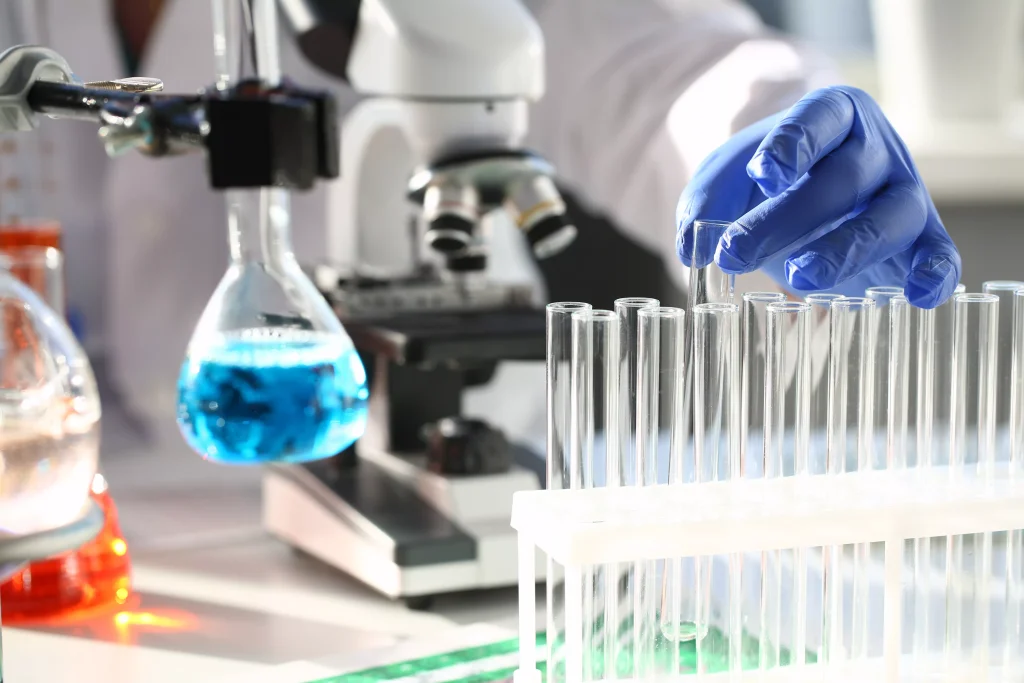
Modern biotechnology relies on peptide custom synthesis to create peptide sequences for research and industry. This complete service includes peptide synthesis, custom peptide synthesis, and other advanced procedures from top peptide synthesis firms. Arborpharmchem tutorial covers six secret methods for synthetic peptides for medication development, peptide sequence synthesis for academic research, and peptide synthesis cost. How are technologies changing peptide production and manufacturing? What is peptide custom synthesis? And How long does it take to synthesize custom peptides?

What’s Peptide Custom Synthesis?
The synthetic peptides made by a peptide synthesis service fulfill exact specifications for diverse uses. After selecting amino acid sequences, solid-phase or liquid-phase synthesis assembles them. Is versatile since it can change length, content, and functional groups.
Peptide custom synthesis offers more precision and customisation choices than regular. Standard peptide synthesis lacks adaptability for particular research needs due to predetermined sequences. However, custom peptides can be labeled or contain non-standard amino acids for more complicated and targeted experiments. Drug development, diagnostics, and therapeutic research require unique peptide functionalities, therefore customization is beneficial.
Custom Peptide Synthesis—How?
It begins with target peptide sequence selection and moves through a comprehensive process. Our solid-phase peptide synthesis service attaches the first amino acid to a resin bead. Peptide bonds are formed by adding amino acids progressively with coupling reagents. After assembling the sequence, the peptide is cleaved from the resin, purified using HPLC, and tested for accuracy. This rigorous process ensures synthetic peptides meet research or industrial needs.
These firms use their expertise and innovative technologies to create high-quality custom peptides. Today’s peptide production and manufacturing equipment allows exact peptide sequence synthesis. Peptide alterations, tagging, and large-scale production are also available to meet unique needs across fields. These companies help academics and biotechnologists make new discoveries by managing peptide synthesis cost and technological hurdles.
Advanced Peptide Sequence Synthesis
To attain precision and functionality, advanced peptide sequence synthesis requires careful design and assembly. Using certain amino acids and coupling chemicals, this method forms peptide bonds sequentially. In solid-phase synthesis, the developing peptide chain is linked to a solid resin, making amino acid addition and removal efficient. Such careful control over peptide sequence synthesis ensures that each unique peptide fits exact parameters, including labeling and non-standard amino acid inclusion.
Advanced peptide sequence synthesis for custom peptides has many advantages. Researchers can customize peptides for drug development and diagnostics by creating highly specialized sequences. This precision ensures synthetic peptides show desired biological activity and interactions. Optimization reduces peptide synthesis cost and time, improving production efficiency. Peptide manufacturing advances promote new research and technological improvements by producing higher-quality, more reliable custom peptides.
High-Efficiency Peptide Production
High-efficiency peptide production accelerates and optimizes peptide manufacturing. Advanced methods including microwave-assisted and automated peptide sequence synthesis improve speed and accuracy. These advances cut cycle times and enhance coupling efficiency, yielding synthetic peptides with fewer contaminants. Real-time monitoring systems give exact control over each process, decreasing errors and enhancing production efficiency.
Peptide manufacturing is profoundly affected by high-efficiency peptide production. By simplifying, firms can make custom peptides faster and cheaper. Peptide synthesis costs are reduced and research and commercial applications can be completed more quickly as a result. These firms can address the increased demand for services in pharmaceuticals, biotechnology, and diagnostics with improved production capabilities. More efficient peptide production drives innovation and progress across scientific domains.
Economical Synthesis
Cost-effective methods cut costs without compromising quality. Automated peptide synthesizers minimize labor expenses and boost yield. To cut peptide synthesis costs, microwave-assisted synthesis can speed up reaction times and use less reagents. Custom peptide synthesis is cheaper for researchers and businesses due to bulk raw material purchases and process optimization.
Successful implementations of these technologies have advanced peptide manufacturing. For instance, some peptide synthesis businesses use solid-phase synthesis with minimal purification processes to produce high-purity synthetic peptides at low cost. Large-scale peptide production using cost-effective methods is another example. These methods provide high-quality custom peptides at low prices, making peptide sequence synthesis easier and supporting a larger range of applications, from academic research to commercial pharmaceutical development.
Innovative Peptide Custom Synthesis Technologies
Innovative peptide custom synthesis technologies have changed the area, making synthetic peptides more precise and efficient. Modern technologies include automated peptide synthesis. Microwave-assisted synthesis speeds reaction times, saving time and money. Flow chemistry and solid-phase synthesis improve custom peptide synthesis accuracy and yield, making complex peptide sequences easier to synthesize.
Automating and integrating AI into peptide synthesis service is predicted to grow. AI-powered platforms can optimize synthesis procedures, predict difficulties, and recommend improvements in real time. Custom peptide synthesis may benefit from the development of increasingly complex structures thanks to emerging technologies like 3D printing. Synthetic peptides are used in more advanced medicinal, diagnostic, and biotechnology applications as purification technologies improve. The industry will advance, making peptide custom synthesis more accessible and adaptable.
Custom Peptide Synthesis Applications
Many scientific and industrial domains use custom peptide synthesis. Protein interactions, enzyme-substrate connections, and antibody formation are all studied in biomedical research using custom peptides. Researchers use them to develop novel peptide-based medicines for specific disorders. Synthetic peptides help diagnose diseases. Researchers also employ custom peptides as antigens to induce immune responses in vaccine development.
Real-world examples show adaptability. A good example is the creation of peptide-based cancer inhibitors that target cancer-promoting proteins. Alternative antibiotics like antimicrobial peptides may solve antibiotic resistance. Anti-aging cosmetics use custom peptides to boost collagen formation and improve skin. These different applications show how custom peptide synthesis advances scientific inquiry and business innovation.

Synthesis Timeframe Optimization
Peptide custom synthesis requires optimized synthesis timeframes since they affect peptide production efficiency and cost. Peptide synthesis duration depends on peptide sequence length, purity, and modifications. Synthesis of shorter, simpler peptides takes less time than larger sequences with non-standard amino acids or post-synthesis modifications. Automated synthesizers and microwave-assisted synthesis can also speed up synthesis.
The time to synthesize custom peptides depends on these factors. Manufacturing simple peptide sequences can take days, but producing complicated ones may take weeks. Peptide synthesis businesses use their expertise and cutting-edge equipment to accomplish tight deadlines. These companies efficiently produce high-quality synthetic peptides for research and industrial uses by optimizing the synthesis process.
Related Posts:
Peptide Custom Synthesis Service From Arborpharm
custom synthesis and contract manufacturing
APIs Intermediates Impact on the Cost of Drug Production 7 Powerful Tips for Cost Reduction