
Industry experts recognize aniline as phenylamine or aminobenzene. Moreover, manufacturers use this compound widely as an essential starting material. In many processes, chemists replace hydrogen atoms on the benzene ring. Alternatively, they modify the amino group with other functional groups. Consequently, these tailored reactions yield a versatile family of aniline derivatives. These compounds show up in three major industries, pharmaceuticals, dyes, and agrochemicals, making them some of the most commercially important aromatic amines in production today.
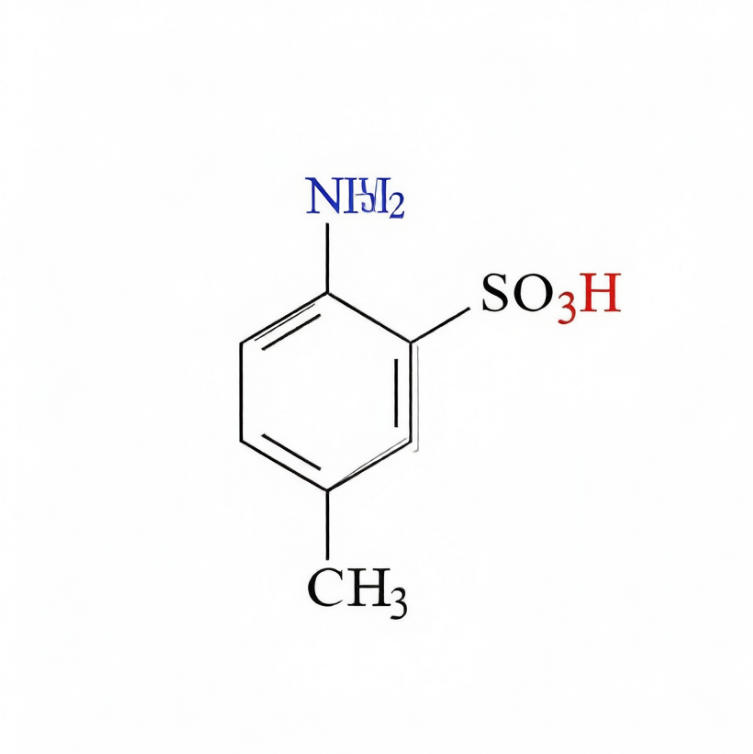
What Are Aniline Derivatives
Aniline itself has a straightforward structure. It is a benzene ring with an amino group (–NH₂) attached directly to the ring. The aniline formula is C₆H₅NH₂, with a molecular weight of 93.13 g/mol.
Chemists define an aniline derivative through chemical substitution. Specifically, researchers replace one or more hydrogen atoms. For instance, they modify the benzene ring. Alternatively, they substitute atoms on the amino group’s nitrogen. That substitution changes the compound’s reactivity, solubility, and biological activity significantly.
There are two broad categories. Ring-substituted anilines carry groups like –Cl, –Br, –NO₂, or –CF₃ at ortho, meta, or para positions on the aromatic ring. N-substituted anilines carry groups on the nitrogen atom itself, such as –CH₃ in dimethylaniline. Both types belong to the broader class of aromatic amines and form the backbone of countless synthetic pathways in chemistry.
Common Types of Aniline Derivatives
Halogenated Anilines
Halogenated anilines, chloro, bromo, and fluoro varieties, are among the most widely produced aniline compounds. The halogen substituent changes both the electron density on the ring and the physical properties of the compound.
Manufacturers commonly use 4-chloroaniline in pharmaceutical synthesis. In addition, chemists frequently choose bromoaniline for agrochemical synthesis. Consequently, both compounds drive key industrial manufacturing processes forward. For more specialized applications, 2-chloro-6-methylaniline and 2-fluoro-6-methylaniline offer additional positional selectivity, which is often needed when building complex drug molecules. Medicinal chemists particularly value the fluorine atom in fluoroanilines. Consequently, they introduce it into drug candidates. As a result, this substitution significantly improves overall metabolic stability.

Nitroanilines
Nitroanilines carry a –NO₂ group on the benzene ring. The nitro group is electron-withdrawing, which pulls electron density away from the ring and reduces the reactivity of the amino group. This makes nitroanilines useful as intermediates rather than end products. Chemists typically reduce them back to diamines or use them as precursors in dye synthesis. They probably encounter para-nitroaniline most frequently within this group.
Alkyl and Aryl Anilines
Alkyl-substituted anilines, such as dimethylaniline (N,N-dimethylaniline), have methyl groups attached to the nitrogen atom. This N-substitution increases the basicity and nucleophilicity of the compound. Dimethylaniline is widely used as a solvent and reagent in organic synthesis.
Ring-alkylated variants, where the methyl or ethyl group sits on the benzene ring rather than the nitrogen, behave differently. 4-bromo-2,6-dimethylaniline is a good example. Two methyl groups flank the amino group directly. Consequently, they create notable steric effects. Therefore, these groups steer regioselectivity during subsequent reactions. This control benefits chemists greatly. In particular, they achieve precise substitution patterns through this approach.

Trifluoromethyl Anilines
Trifluoromethyl anilines carry a –CF₃ group on the benzene ring. The CF₃ group is strongly electron-withdrawing and highly lipophilic. These properties make trifluoromethyl anilines particularly attractive for drug synthesis, where lipophilicity and metabolic stability both matter. Compounds like 4-fluoro-2-(trifluoromethyl)aniline appear frequently as building blocks in active pharmaceutical ingredient (API) manufacturing.

How Aniline Derivatives Are Made
Most aniline derivatives trace back to the same starting point, benzene nitration. Benzene reacts with a nitrating mixture (HNO₃/H₂SO₄) to produce nitrobenzene. Then nitrobenzene is reduced to aniline, typically using iron and hydrochloric acid or catalytic hydrogenation.
From that aniline base, chemists branch out in different directions.
One common route is direct electrophilic aromatic substitution (EAS). Because the amino group is electron-donating, it activates the benzene ring toward further substitution and directs incoming groups to the ortho and para positions. This makes it relatively straightforward to introduce additional substituents at predictable positions.
The Sandmeyer reaction opens another pathway. Aniline is first converted to a diazonium salt by reacting with sodium nitrite and hydrochloric acid at low temperature. Chemists react the diazonium intermediate with copper(I) chloride, bromide, or cyanide to introduce halogens or cyano groups. Chemists widely use the Sandmeyer reaction in aniline preparation workflows. It allows precise substitution that direct EAS cannot always achieve.
Reactivity and Key Reactions
The amino group in aniline is a strong electron donor. It pushes electron density into the benzene ring through resonance, making the ring highly reactive toward electrophiles. This is why aniline derivatives react quickly in EAS reactions at the ortho and para positions.
Beyond EAS, the diazonium chemistry mentioned above is central to aniline reaction chemistry. When aniline derivatives are diazotized and then coupled with electron-rich aromatic compounds, they form azo compounds (Ar–N=N–Ar’). This azo coupling reaction is the backbone of the synthetic azo dye industry and produces some of the most vivid colorants used in textile and printing industries.
Aniline also reacts with acyl chlorides and anhydrides to form anilides, N-acyl derivatives of aniline. Acetanilide is probably the best-known anilide. These compounds are used as intermediates in pharmaceutical manufacturing.
Uses and Applications
Azo dyes represent one of the largest application areas for aniline derivatives. A wide range of textile, leather, and paper dyes are produced through diazonium coupling reactions. For suppliers working in this space, a dedicated range of dye intermediates covers the key building blocks used in commercial dye production.
In pharmaceutical manufacturing, halogenated and trifluoromethyl anilines are heavily used as starting materials and intermediates for APIs. Chloro and bromo anilines enable palladium-catalyzed cross-coupling reactions, Suzuki, Buchwald-Hartwig, and related processes, which are now standard in modern drug synthesis. The pharmaceutical intermediates portfolio covers a wide selection of aniline-based building blocks used across these routes.
Agrochemicals are another major end market. Many herbicides and insecticides contain an aniline-derived fragment in their structure. The combination of diverse reactivity and well-established production routes keeps aniline derivatives as a staple feedstock for agrochemical manufacturers.
Frequently Asked Questions
What are aniline derivatives?
Replacing hydrogen atoms on the aniline (C₆H₅NH₂) benzene ring or amino group creates aniline derivatives. Main types include halogenated, nitro, alkyl, and trifluoromethyl anilines.
How are aniline derivatives synthesized?
The most common route starts with nitration of benzene, followed by reduction to aniline. From there, electrophilic aromatic substitution or the Sandmeyer reaction (via diazonium salts) introduces additional substituents like halogens or cyano groups.
What is the difference between aniline and substituted anilines?
Aniline is the parent compound (C₆H₅NH₂). Substituted anilines carry extra groups, such as –Cl, –Br, –NO₂, –CH₃, or –CF₃, on the ring or nitrogen. Those groups change both the reactivity and the application of the compound.
What are aniline derivatives used for?
They are used as building blocks for azo dyes, pharmaceutical intermediates and APIs, agrochemicals, and specialty polymers. Trifluoromethyl anilines are especially common in drug synthesis.
Why are halogenated anilines important in pharmaceutical synthesis?
Chloro, bromo, and fluoro anilines work well as intermediates in cross-coupling reactions. They allow chemists to attach new molecular fragments precisely, which is why they appear across many drug and agrochemical manufacturing routes.
Looking for a dependable supply of aniline derivatives for your next program? Arbor Pharmchem manufactures halogenated, nitro, alkyl and trifluoromethyl anilines from laboratory through commercial scale. Contact Arbor Pharmchem for a quotation, datasheet, or custom synthesis enquiry.


